
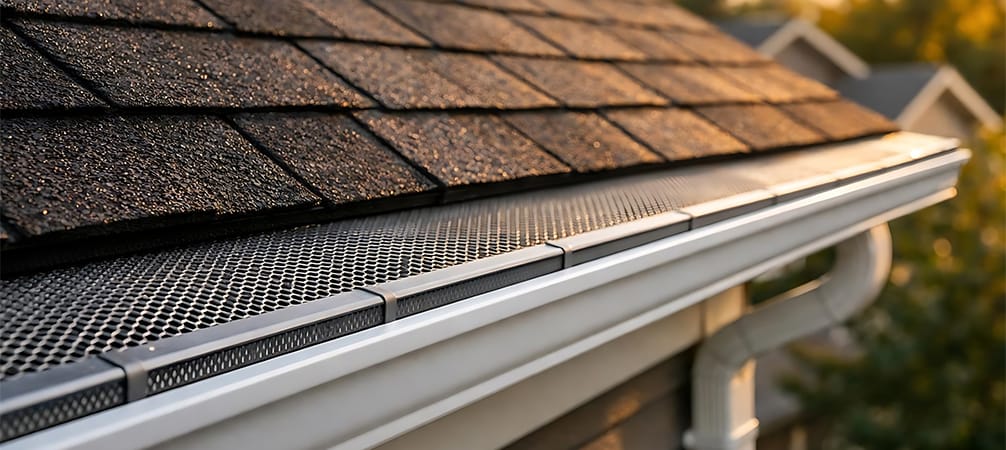
Charleston-area homeowners ask a lot of their gutters. The system has to handle heavy rain while dealing with pine needles, leaves, seed pods, roof grit, and debris carried by coastal winds. Adding protection can reduce clogs, but the terms “gutter guard” and “gutter screen” do not always describe the same level of performance.
Gutter screens are usually simple, open coverings that block larger leaves. Gutter guards are a broader category that can include perforated metal, micro-mesh, and other systems designed to keep smaller debris out while allowing rainwater through.
The better choice depends on the debris around your home, the system’s design, and how much maintenance you want to perform.
How Gutter Screens Work
Basic gutter screens sit over the gutter channel. Their larger openings catch leaves and twigs while allowing water to enter.
Screens can be an affordable improvement for a home with limited tree cover and mostly large debris. Their open design also allows water to enter quickly. However, pine needles, seeds, shingle granules, and smaller material may pass through or become lodged in the openings.
Debris can also collect on top of a screen. If it is not removed, rainwater may flow over the buildup instead of through it.
How Gutter Guards Work
“Gutter guard” covers several designs, including fine-mesh and rigid perforated systems. A well-matched guard filters out smaller debris than a basic screen and helps keep the gutter channel open.
South Atlantic Gutters installs gutter guard systems that are custom fitted, tested for water flow, and intended to reduce clogs from leaves, pine needles, and other common Lowcountry debris.
Guards still need occasional inspection and surface cleaning. Their advantage is reduced buildup inside the channel — not a promise that the roofline will never need attention again.
Gutter Guards vs. Gutter Screens at a Glance
Debris Control
Screens generally stop large leaves and twigs. Guards with smaller openings can also block pine needles, seed pods, and finer material. For wooded Lowcountry properties, the ability to handle small debris often matters more than stopping an occasional broad leaf.
Heavy-Rain Performance
Any protection system has to admit water quickly enough for the roof area and gutter size. The product, pitch, installation, and cleanliness of the surface all affect performance. A professional should evaluate the home rather than choosing a product based only on package claims.
Maintenance
Screens may need frequent surface clearing, especially when debris catches in the openings. Better guard systems can reduce cleaning frequency, but they should still be checked after storms and during routine home maintenance.
Durability
Lightweight screens can bend, shift, or pull loose. Rigid, professionally fastened guards generally offer a more secure long-term installation. Material quality matters in Charleston’s humid, coastal environment.
Appearance
Both options can be relatively discreet when properly installed. A custom-fit guard usually creates a cleaner, more integrated roofline than a loose or uneven screen.
Which Option Fits a Lowcountry Home?
A basic screen may be enough when:
- Tree cover is light
- Most debris consists of larger leaves
- The homeowner is comfortable with regular maintenance
- The existing gutter system is in good condition
A finer gutter guard may be the better fit when:
- Pine needles and small debris are common
- Gutters clog repeatedly
- The home sits beneath dense tree cover
- Ladder access is difficult
- The homeowner wants to reduce cleaning frequency
Before adding either product, the existing gutters should be clear, properly sloped, and securely attached. Covering a gutter with standing water, leaks, or incorrect pitch will not solve the underlying problem. South Atlantic Gutters can evaluate whether the system needs cleaning or gutter repair first.
Why Professional Installation Matters
A protection system that is cut poorly or fastened incorrectly may create gaps, interfere with the roof edge, or allow water to overshoot. Professional installation includes measuring, custom fitting, securing the material, and testing flow.
The full drainage path matters too. Downspouts must remain open, and discharge points should move water away from the house. If runoff still collects in the yard, a yard drainage specialist can look beyond the gutter itself.
Frequently Asked Questions
For homes with pine needles and smaller debris, a fine guard often provides better filtration than a basic screen. The best option still depends on the roof, trees, gutter capacity, and installation.
They can, provided the openings remain clear and the gutters are properly sized and sloped. Debris sitting on top can reduce how quickly water enters.
Yes. They reduce debris inside the gutter but may still need periodic inspection and surface cleaning.
Sometimes. The gutters should first be inspected for leaks, sagging, corrosion, weak fasteners, and improper slope. In some cases, repair or new gutter installation makes more sense.
Choose Protection Built for Your Property
The best gutter protection is the one matched to the debris and rainfall your home actually faces.
South Atlantic Gutters can inspect your system, explain the practical differences between options, and install a solution designed for Lowcountry conditions. Schedule a free, no-obligation quote to compare the right choices for your home.