
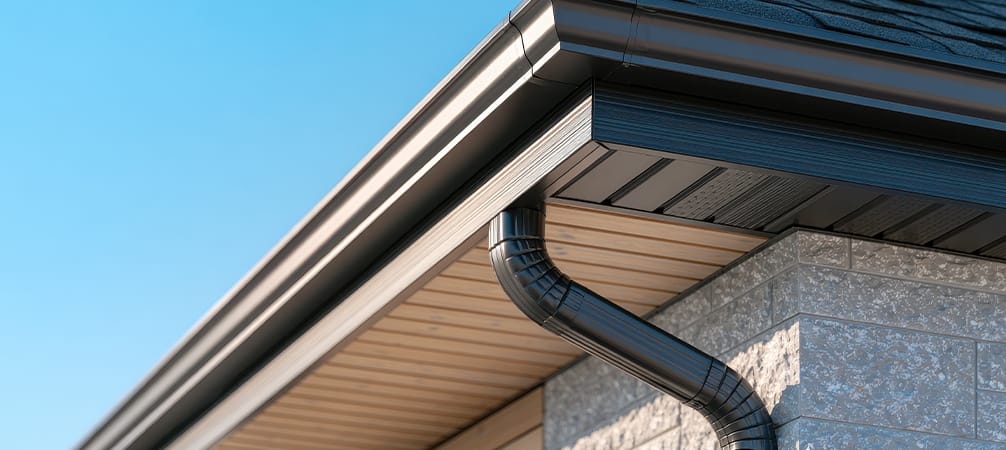
Choosing gutter material isn’t just about color or price. In Charleston, gutters face heavy rain, humidity, intense sun, windblown debris, and salt in the coastal air. The material has to manage all of that while staying securely attached to the roofline.
Aluminum gutters are lightweight, rust-resistant, and easy to fabricate into seamless runs, which makes them a popular fit for Lowcountry homes. Steel gutters offer greater impact strength but are heavier and may be more vulnerable to rust if their protective coating is scratched or worn.
The right choice depends on the property, budget, maintenance expectations, and installation details. Continue below to learn more from the team at South Atlantic Gutters.
Why Homeowners Choose Aluminum Gutters
Aluminum naturally resists rust and is available with durable factory-applied finishes. Because it is lightweight, installers can form long seamless sections on site and secure them without adding unnecessary weight to the fascia.
Key advantages include:
- Good resistance to rust
- Seamless fabrication for fewer joints
- Wide selection of colors and finishes
- Lighter weight than steel
- Easier shaping for custom rooflines
- Practical balance of performance and cost
Aluminum is not indestructible. A falling branch or hard ladder impact can dent it, and thinner material may bend more easily. Proper gauge, hanger spacing, and installation quality affect long-term performance.
Why Some Properties Use Steel Gutters
Steel is strong and resists dents better than aluminum. That can be useful in settings where impact resistance is a high priority.
Its tradeoffs matter in coastal South Carolina. Steel is heavier, which puts more demand on attachment points. Galvanized or coated surfaces resist corrosion, but scratches and exposed edges may rust when repeatedly exposed to moisture and salt air.
Steel systems can perform well when the material, finish, and maintenance plan are appropriate. They are simply not automatically the best choice because they feel heavier or stronger.
Aluminum vs. Steel Gutters in Charleston
Corrosion Resistance
Aluminum has the advantage because it does not rust like steel. It can still oxidize, and its finish can wear, but it is generally well suited to humid, salt-influenced conditions.
Steel relies more heavily on its zinc layer or protective coating. Once the barrier is damaged, rust can begin at the exposed area.
Strength and Dent Resistance
Steel is stronger against impacts. Aluminum can dent more readily, especially if thin material is used. A quality aluminum system with correct hangers still handles normal Lowcountry weather effectively when maintained.
Weight
Aluminum’s lower weight makes it easier to fabricate and install in long seamless runs. Steel requires secure support and sound fascia because the material itself adds more load.
Maintenance
Both materials need clear channels, open downspouts, and periodic inspection. Steel also calls for close attention to scratches and early rust. Aluminum should be checked for dents, loose fasteners, worn finish, and standing water.
Cost
Pricing varies by material thickness, finish, home size, roof complexity, and downspout requirements. Aluminum is often the more cost-effective residential option, while steel may cost more in material and labor. A site-specific quote provides a more useful comparison than a broad per-foot estimate.
Seamless Options
Aluminum is commonly formed into custom seamless gutters at the property. Fewer joints mean fewer potential leak points along a run. South Atlantic Gutters provides custom seamless gutter installation sized and sloped for the home.
Material Is Only Part of Gutter Performance
Even premium metal will underperform if the system is undersized, poorly pitched, loosely fastened, or connected to inadequate downspouts.
A professional plan considers:
- Roof area and pitch
- Valleys where water concentrates
- Gutter size and material thickness
- Hanger spacing
- Number and location of downspouts
- Safe discharge away from the home
- Tree cover and debris type
Routine gutter cleaning and timely gutter repair protect either material by preventing excess weight, standing water, and avoidable strain.
Which Gutter Material Is Best for Your Home?
For many Charleston-area residences, coated aluminum seamless gutters offer the most practical combination of rust resistance, appearance, weight, and value. Steel may be worth considering when superior dent resistance is especially important, and the homeowner accepts its weight and corrosion-maintenance needs.
The decision should follow an inspection of the roofline and drainage needs. It should not be based on material alone.
Frequently Asked Questions
Aluminum does not rust in the way steel does. Its finish can still deteriorate, and oxidation can occur, so cleaning and inspection remain important.
Steel generally offers greater resistance to dents and impacts. However, strength is only one factor; weight, rust risk, installation, and maintenance also matter.
Service life varies with material quality, installation, tree cover, coastal exposure, storm damage, and maintenance. Regular cleaning and early repair can extend the useful life of the system.
Often, yes. The existing system should first be checked for proper slope, secure fastening, and condition. Professionally fitted gutter guards can reduce debris buildup.
Get a Recommendation Based on Your Roofline
The best gutter is not the heaviest product — it’s the correctly designed system made from material suited to the home and local environment.
South Atlantic Gutters can inspect your property, explain the tradeoffs, and provide an honest recommendation. Request a free estimate for custom gutters built for Charleston-area weather.