
Gutter guards can reduce how often you need to clean your gutters, but not every guard works the same way — or fits every roof. Some styles handle pine needles well but struggle with fine grit; others shed leaves easily but need a specific gutter profile to install.
South Atlantic Gutters installs and services several gutter guard types across Summerville and Charleston. Here’s how the main options compare.
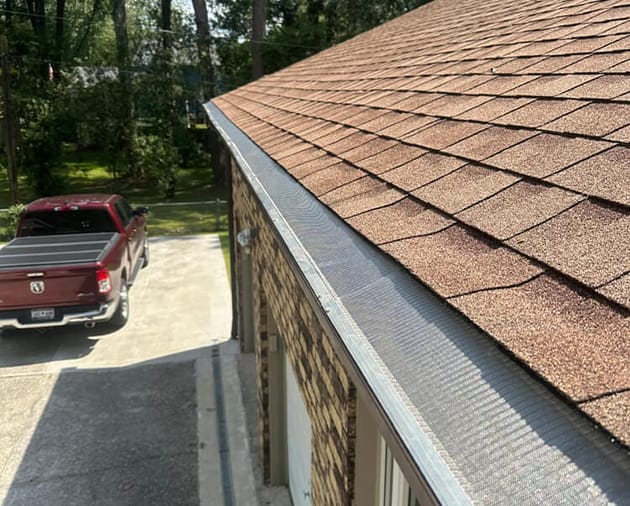
Micro-mesh guards use a fine mesh screen that blocks small debris, including pine needles and grit, while still letting water through. They’re one of the more effective options for homes surrounded by pine trees, which is common throughout the Lowcountry.
Micro-mesh guards typically need more frequent surface brushing than other styles, since fine debris can sit on top of the screen instead of washing through, but they generally require less full gutter cleaning underneath.
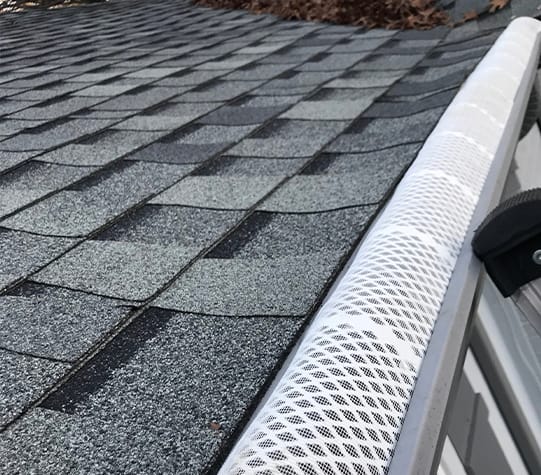
Reverse-curve guards use a curved solid surface that directs water down and around into the gutter channel while leaves and larger debris slide off the edge. They handle heavy leaf drop well but can struggle with smaller debris like pine needles, which can follow the water into the channel.
This style is also more visible from the ground than mesh options, which is worth considering on homes where roofline appearance matters.
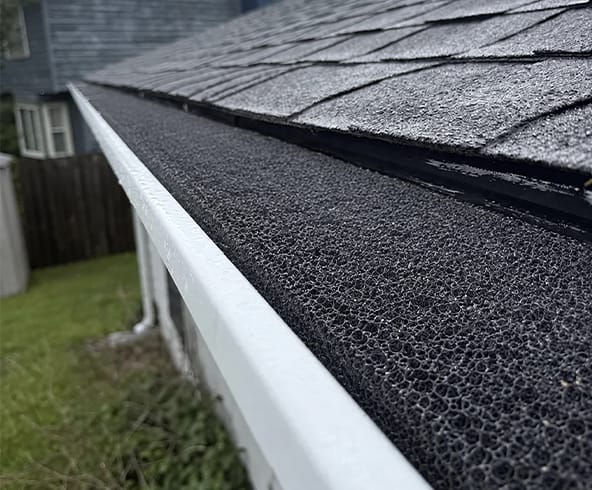
Foam guards sit inside the gutter channel, allowing water to pass through the foam while blocking larger debris on top. They’re relatively inexpensive and easy to install, but the foam can degrade over time, and small debris can eventually work into the material itself, reducing water flow.
We typically recommend foam as a lower-cost, shorter-term option rather than a long-term solution for heavily wooded properties.
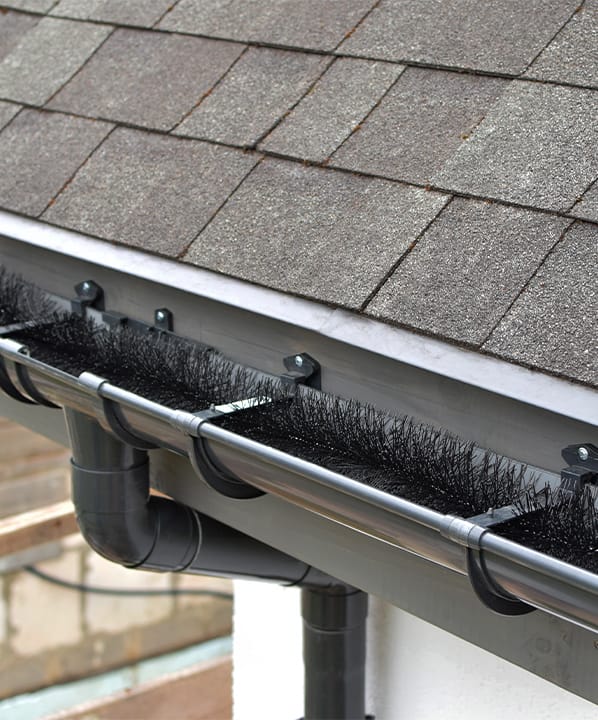
Brush guards are cylindrical brushes that sit inside the gutter, catching leaves and debris on the bristles while allowing water to flow underneath.
They’re simple to install and remove for cleaning, but they can trap small debris and moisture within the bristles, which may require more frequent maintenance in areas with heavy leaf drop.
Gutter guards can typically go on an existing gutter system without replacing the gutters, as long as the gutters are in good condition.
If the existing system has slope, leak, or attachment issues, we’ll flag those first since guards installed over a failing system won’t solve the underlying problem.
No gutter guard eliminates the need for maintenance. All types benefit from periodic inspection, and most homes still need occasional gutter cleaning, just less often than a completely open system.
“Gutter cover” and “gutter screen” are often used to describe different types of gutter guards. A screen usually uses mesh or another open material over the gutter, while a cover sits over the channel and directs water into the gutter.
Both are designed to keep leaves, pine needles, and other debris out so water can flow through the gutters and downspouts.
The right option depends on the gutter system, roof pitch, slope, and debris the roof receives.
Micro-mesh guards generally perform best against pine needles, since the fine screen blocks needles while still allowing water through.
No. All gutter guard types still benefit from periodic inspection and occasional cleaning, just less often than an unprotected gutter system.
Most guard types can be added to an existing seamless gutter system in good condition. Half-round profiles have more limited guard options than standard K-style gutters.
They can be more visible than mesh-style guards, since the curved surface sits above the gutter’s front edge.
Foam guards are generally a shorter-term option; the foam can degrade and become less effective over several years compared with mesh or reverse-curve systems.
Yes. South Atlantic Gutters installs and services gutter guards throughout Summerville, Charleston, and the surrounding Lowcountry communities.
The right gutter guard depends on the trees, roofline, and gutter system. South Atlantic Gutters can review your home and recommend an option that fits.