
After a heavy rain, most yards take a few hours to dry out. That’s normal. What’s not normal is when water is still sitting in your yard the next morning, your grass has developed soft, soggy patches that never fully dry, or water is collecting in places it shouldn’t be — like against your foundation.
Yard drainage problems don’t fix themselves. And in the Lowcountry, where rain is heavy, and the soil doesn’t always drain the way you’d hope, ignoring these signs usually means the situation gets worse before it gets better.
If you’re already searching for yard drainage contractors in Charleston, SC, here’s what to look for — and what those signs are telling you.
Why Yard Drainage Problems Should Never Be Ignored
Drainage issues might start as a nuisance — a soggy corner of the yard, a low spot that stays wet. But water always finds a path, and if your yard isn’t directing it away from your home, it will find its way toward things you don’t want it touching: your foundation, your crawl space, your landscaping, and eventually your home’s structure.
The longer poor drainage goes unaddressed, the more expensive the consequences become. Foundation damage, mold growth, and eroded landscaping are all possible outcomes of water that has nowhere to go. Addressing the problem early — while it’s still a drainage issue rather than a structural one — is always the smarter, cheaper move.
Sign #1: Standing Water Remains Long After It Rains
A yard that drains well should clear within 24 hours after a normal rainstorm. If you’re still looking at standing water 48 hours later — or longer — something in your drainage system isn’t working.
This could be caused by:
- Compacted soil that water can’t penetrate
- Low spots in the yard that collect runoff with nowhere to go
- Improper grading that directs water toward a problem area
- Downspouts discharging too close to the home with no drainage outlet
Standing water is the most obvious sign that something is off, and it’s usually the first thing homeowners notice. Don’t wait for a second or third rain event to confirm what you’re seeing; it won’t get better on its own.
Sign #2: Soggy Areas and Dying Grass in Your Yard
You don’t always see standing water. Sometimes the problem shows up as patches of grass that stay soft and spongy underfoot, even when it hasn’t rained in several days. Or you’ll notice areas where the grass is thinning, yellowing, or simply dying off without an obvious cause.
Grass roots need oxygen. When soil stays saturated, roots suffocate — and what looks like a lawn care problem is actually a drainage problem. The grass is telling you that water is sitting below the surface, even when the top looks dry.
These soggy, stressed areas are often the result of underground water movement or compacted soil that traps moisture. A yard drainage specialist can assess whether a French drain, grading adjustment, or other solution is the right fix.
Sign #3: Water Collects Near Your Foundation
This one demands immediate attention.
Water pooling against your home’s foundation isn’t just a drainage inconvenience — it’s a structural risk. Over time, water intrusion can cause the following:
- Cracks in the foundation
- Moisture and mold in the crawl space or basement
- Soil erosion that undermines the footing
- Hydrostatic pressure that pushes against foundation walls
Foundation repairs are among the most expensive home repairs you can face. If water is consistently collecting near your home after rain, the time to act is now — not after you’ve noticed cracks or moisture intrusion inside.
Proper grading, downspout extensions, and drainage systems like French drains and pop-up emitters can redirect water well away from the home before it becomes a foundation issue.
Sign #4: Soil Erosion Around Landscaping and Walkways
Erosion is what happens when water moves with enough force or frequency to carry soil with it. If you’re noticing:
- Mulch washing away from planting beds
- Exposed roots near trees or shrubs
- Channels or ruts forming along walkways or the lawn edge
- Gravel or dirt deposits collecting at the low end of your yard
…then water is moving across your property with enough speed or volume to cause damage. This kind of erosion doesn’t just affect your landscaping — it reshapes your yard’s grade over time, making drainage issues progressively worse.
A professional drainage service can evaluate whether downspout placement, surface drainage, or an underground system is the most effective solution for your specific yard layout.
Sign #5: Mold, Mildew, or Excess Moisture Around Your Home
Mold and mildew need two things: organic material and moisture. If you’re finding mold on the outside of your home, whether along the foundation, under the eaves, near downspouts, or on your siding, water is staying where it shouldn’t be.
Interior moisture is even more concerning. A musty smell in a crawl space, visible moisture on basement walls, or condensation that doesn’t go away can all be traced back to water that isn’t draining away from your home properly.
These issues are rarely solved by cleaning alone. The source of the moisture needs to be addressed, and that usually means fixing the drainage problem that’s allowing water to accumulate near the home in the first place.
When to Contact a Yard Drainage Specialist
If you’re experiencing any of the signs above — standing water, soggy patches, erosion, moisture near the foundation — it’s time to stop guessing and get a professional assessment.
The right time to call is before the problem escalates. DIY fixes like adding topsoil to a low spot or repositioning a downspout may offer temporary relief, but they don’t address the underlying drainage issue. If the problem keeps coming back, a professional can identify the root cause and recommend a solution that actually works.
You can also check out information on water management in Summerville, which covers how gutters and yard drainage work together as a complete system. Understanding the full picture often helps homeowners see why one part of the system failing can create problems elsewhere.
Professional Yard Drainage Solutions for Long-Term Results
Not every yard drainage problem requires the same fix. A qualified yard drainage contractor will assess your specific situation and recommend the right solution, whether that’s:
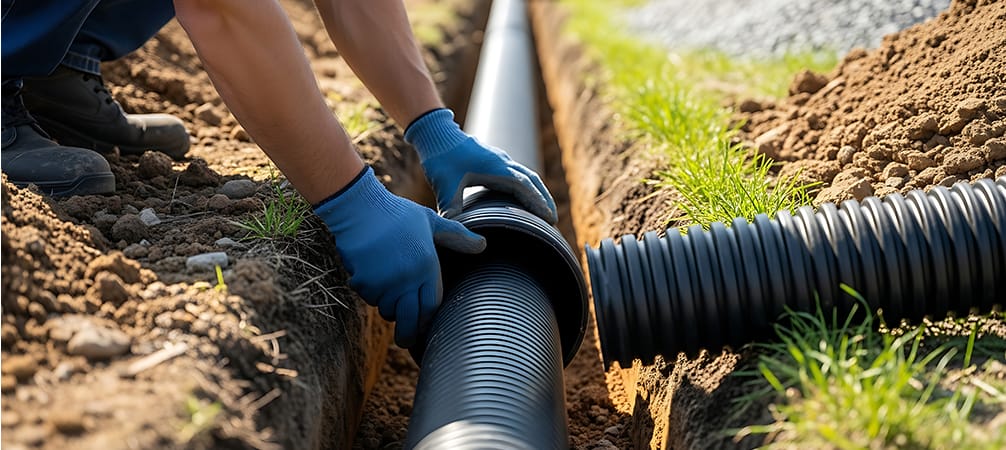
- French drains — Underground perforated pipes that collect and redirect subsurface water away from problem areas
- Pop-up emitters — Connected to downspouts or French drains, these release water at a safe distance from the home
- Grading adjustments — Reshaping the ground so water flows away from the home naturally
- Downspout extensions — Simple but effective when water is discharging too close to the foundation
- Channel drains — Surface drains placed in areas like driveways or along walkways where water consistently pools
The goal isn’t just to solve today’s drainage problem — it’s to build a system that handles Charleston’s rainfall for years without ongoing issues.
If you’re in the Summerville area and dealing with standing water or yard moisture, Summerville drainage services are available from South Atlantic Gutters — a local team that understands the specific drainage challenges in the Lowcountry.
Ready to stop watching the water pool and start fixing the problem? Contact South Atlantic Gutters for a free assessment. We’ll take a look, tell you what’s causing the issue, and walk you through the options.
Frequently Asked Questions
If water remains in your yard for more than 24–48 hours after rainfall, or if you notice erosion, foundation moisture, or persistent soggy areas, it’s time to consult a professional.
Common causes include improper grading, compacted soil, clogged drainage systems, and inadequate runoff management.
Standing water can contribute to foundation problems, landscape damage, mold growth, and erosion.
If DIY solutions aren’t resolving recurring drainage issues, a professional specialist can identify the root cause and recommend long-term solutions.