
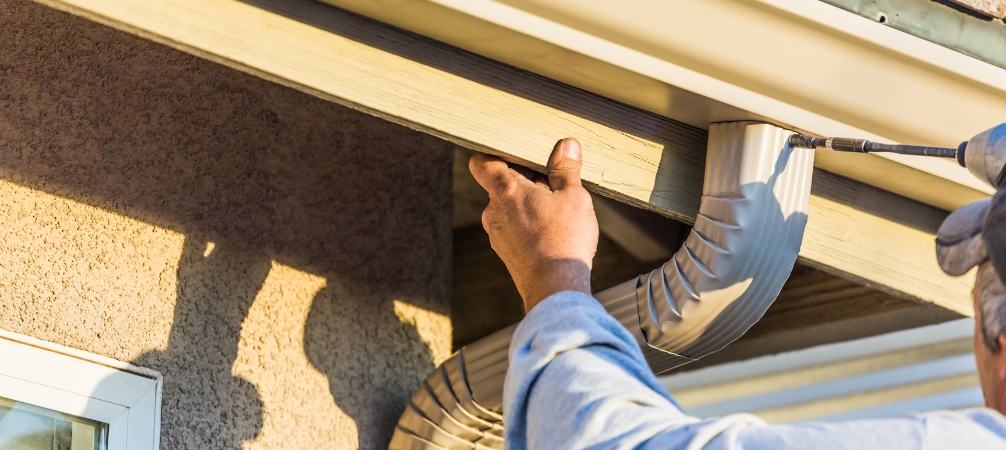
After a heavy storm rolls through Ridgeville, most homeowners do a quick walk around the yard, check for fallen branches, and move on. Gutters, however, are easy to overlook—especially when the damage isn’t apparent from the ground. The problem is, storm-related gutter issues often start small and quietly cause bigger problems weeks or months later.
Before the next rain hits, this blog explores the key things Ridgeville homeowners should check first.
1. Look for Gutters Pulling Away From the House
Strong wind and heavy rain can loosen gutter hangers or pull sections away from the fascia board. From the ground, this may look like a slight dip or uneven line along the roof edge.
Why it matters: When gutters separate even a little, water can run behind them instead of into them. That moisture can soak fascia boards, creep into soffits, and eventually lead to rot—all before you see visible damage inside the home.
2. Check for Overflow Marks or Washed-Out Soil
Storms in Ridgeville often dump a lot of water in a short time. If your gutters couldn’t keep up, you might notice:
- Mud splashed up on the siding
- Trenches forming below downspouts
- Mulch or pine straw washed away
These signs usually point to clogs, improper slope, or downspouts that aren’t directing water far enough away from the house.
3. Inspect Seams, End Caps, and Corners
After a storm, leaking seams are one of the most common gutter repair issues we see. Wind-driven rain finds weak points fast, especially at joints and corners.
What to look for:
- Drips or stains beneath seams
- Rust spots or peeling sealant
- Water trails down the siding
Small seam failures may not seem urgent, but left alone, they can lead to fascia damage and water intrusion behind the gutter system.
4. Don’t Ignore Downspouts
Gutter downspouts take the brunt of storm runoff. High water volume can loosen connections, dent sections, or knock extensions out of place.
Make sure:
- Downspouts are still securely attached
- Water is flowing freely during rainfall
- Extensions haven’t shifted closer to the foundation
In Ridgeville’s soil conditions, poor drainage can quickly lead to pooling water around the home— something no foundation appreciates.
5. Watch for Subtle Signs Inside the Home
Not all storm damage shows up outdoors right away. After a significant rain event, keep an eye out for:
- Damp spots near exterior walls
- Peeling paint or bubbling drywall
- Musty smells near rooflines
These can sometimes trace back to gutter problems, allowing water where it doesn’t belong.
Why Post-Storm Gutter Repairs Matter in Greater Charleston
The Lowcountry’s mix of heavy rain, mature trees, and shifting soil means gutter issues don’t stay minor for long. Addressing repairs early helps:
- Prevent fascia and soffit damage
- Protect your foundation
- Preserve landscaping and outdoor spaces
- Avoid more expensive repairs down the road
The goal isn’t perfection but catching problems before they get worse.
When to Call a Professional Gutter Repair Company in Ridgeville, SC
If something looks off or if you’re unsure what you’re seeing from the ground, it’s usually worth having a professional take a closer look at your property. Experienced gutter repair teams know what storm damage looks like and what can safely wait versus what needs attention now.
A quick inspection after a storm can offer peace of mind and help keep your gutter system working when the next round of rain comes through.
Reach out for all your gutter-related needs. From gutter repair to new gutter installation and thorough gutter cleaning services, our local gutter contractors make it easy for customers to protect and maintain their Ridgeville home. Contact us to get started.