
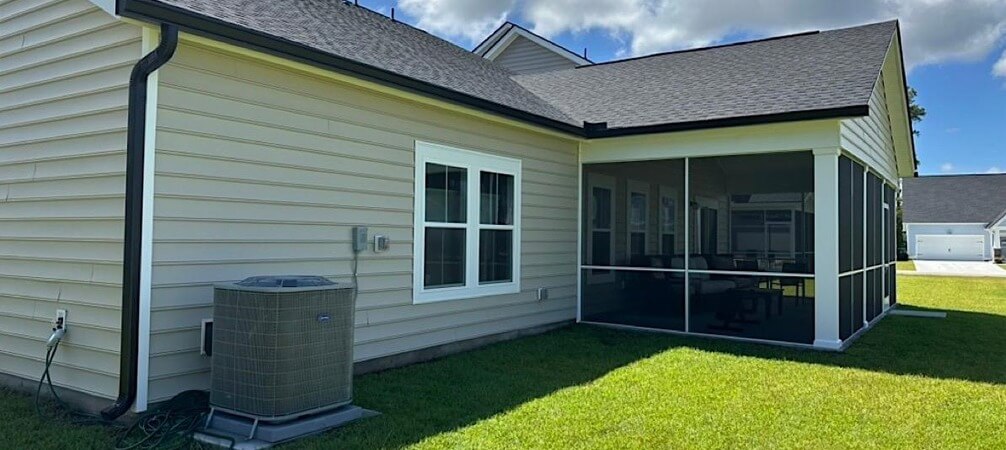
Most Homeowners Get This Wrong
Gutters get all the attention, but your downspouts are doing just as much work. And if they’re not draining in the right place, you’re still dealing with the same problems, such as standing water, foundation issues, and erosion around your home.
Why It Matters More Than You Think
Your gutter system isn’t just there to catch water. It’s there to move it away from your home. If your downspouts dump water too close to the foundation, you can end up with:
- Soil erosion
- Water pooling around the base of your home
- Foundation settling or cracks
- Crawlspace moisture issues
In a place like Charleston, where heavy rain hits fast and hard, small drainage mistakes quickly turn into bigger problems.
The Rule of Thumb: Get Water Away — Not Just Off the Roof
At a minimum, downspouts should discharge water at least 4 to 6 feet away from your home. But in many cases, especially with sandy soil or flat lots, that’s not enough. The goal is to move water far enough away that it can’t make its way back toward your foundation.
If water is still pooling or running back after a storm, your rain gutter system needs more than just a basic extension.
The Most Common Downspout Mistakes
1. Draining Right at the Foundation: Short downspouts that stop a foot or two from the house don’t do much. Water ends up right back where it started.
2. Aiming Toward the House: It sounds obvious, but it happens. Poor grading or placement sends water back toward the foundation instead of away from it.
3. No Consideration for Slope: If your yard is flat or slopes the wrong way, water isn’t going anywhere fast.
4. Dumping Water Onto Walkways or Driveways: This creates runoff that can lead right back to the house or cause long-term surface damage.
Where Your Downspouts Should Drain
Every property is a little different, but here are the best-case scenarios:
1. Onto a Sloped Lawn (Away From the Home): This is the simplest and most effective option, as long as the ground naturally carries water away.
2. Into Underground Drainage (Pop-Up Emitters or Pipes): For tighter lots or problem areas, buried drainage systems move water well away from the home before releasing it.
3. Toward a Designated Drainage Area: Swales, drainage paths, or designated runoff zones help control where water collects.
4. Connected to a French Drain System: If your yard already struggles with drainage, tying your downspouts into a larger system can solve multiple problems at once.
When Extensions Aren’t Enough
Those basic plastic extensions you see at big box stores can help; however, they’re not a long-term solution for every home.
If you’re dealing with any of the following issues, it’s time to consider a more comprehensive drainage setup:
- Persistent pooling
- Washout around your foundation
- Water in your crawlspace
- Overflow during heavy rain
Not Sure Where Yours Are Draining?
This is one of those things that’s easy to overlook until it becomes a problem. At South Atlantic Gutters, our Charleston gutter experts look at the full picture, including gutters, downspouts, and how water actually moves across your property. If something’s off, we’ll show you exactly what’s happening and what needs to change. Reach out to get started.